
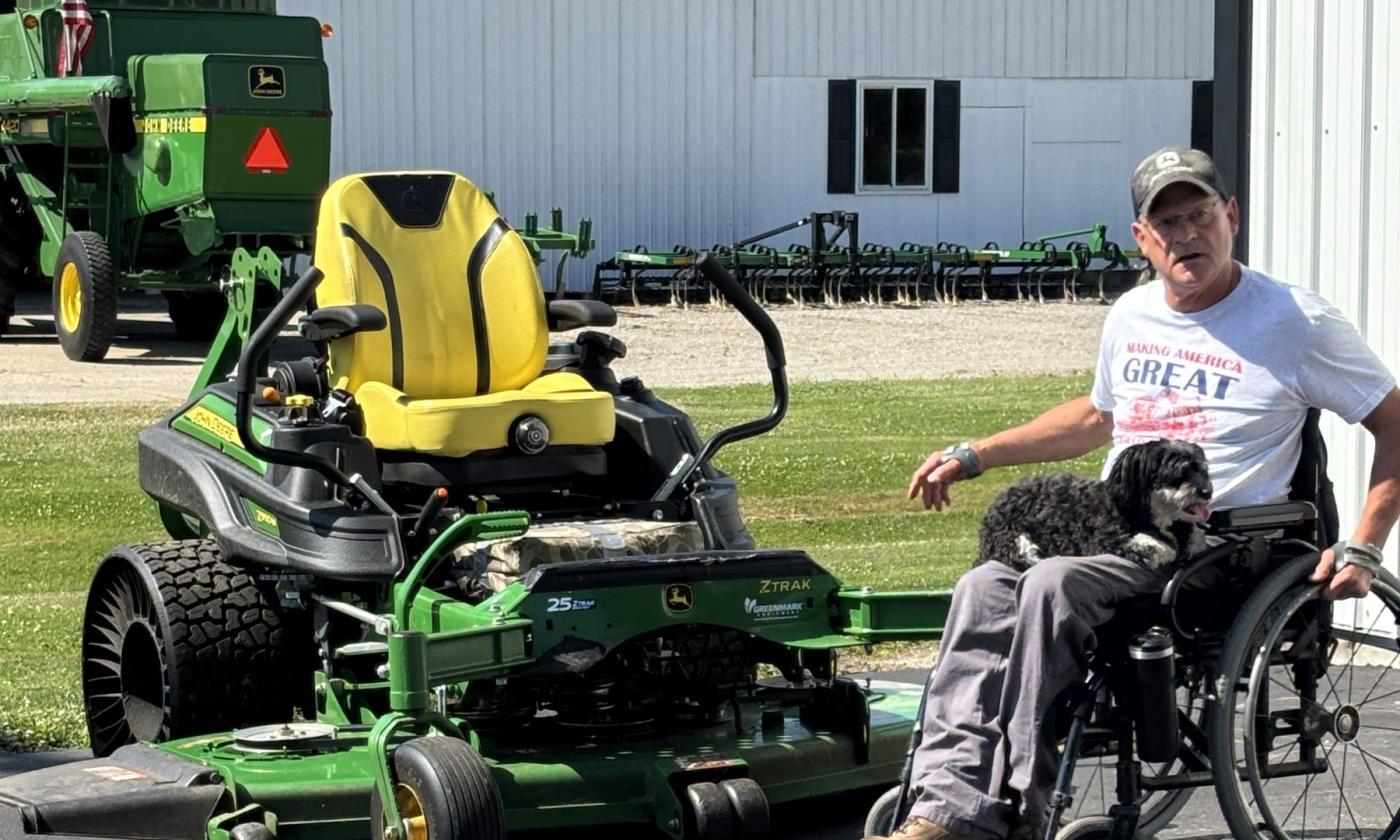
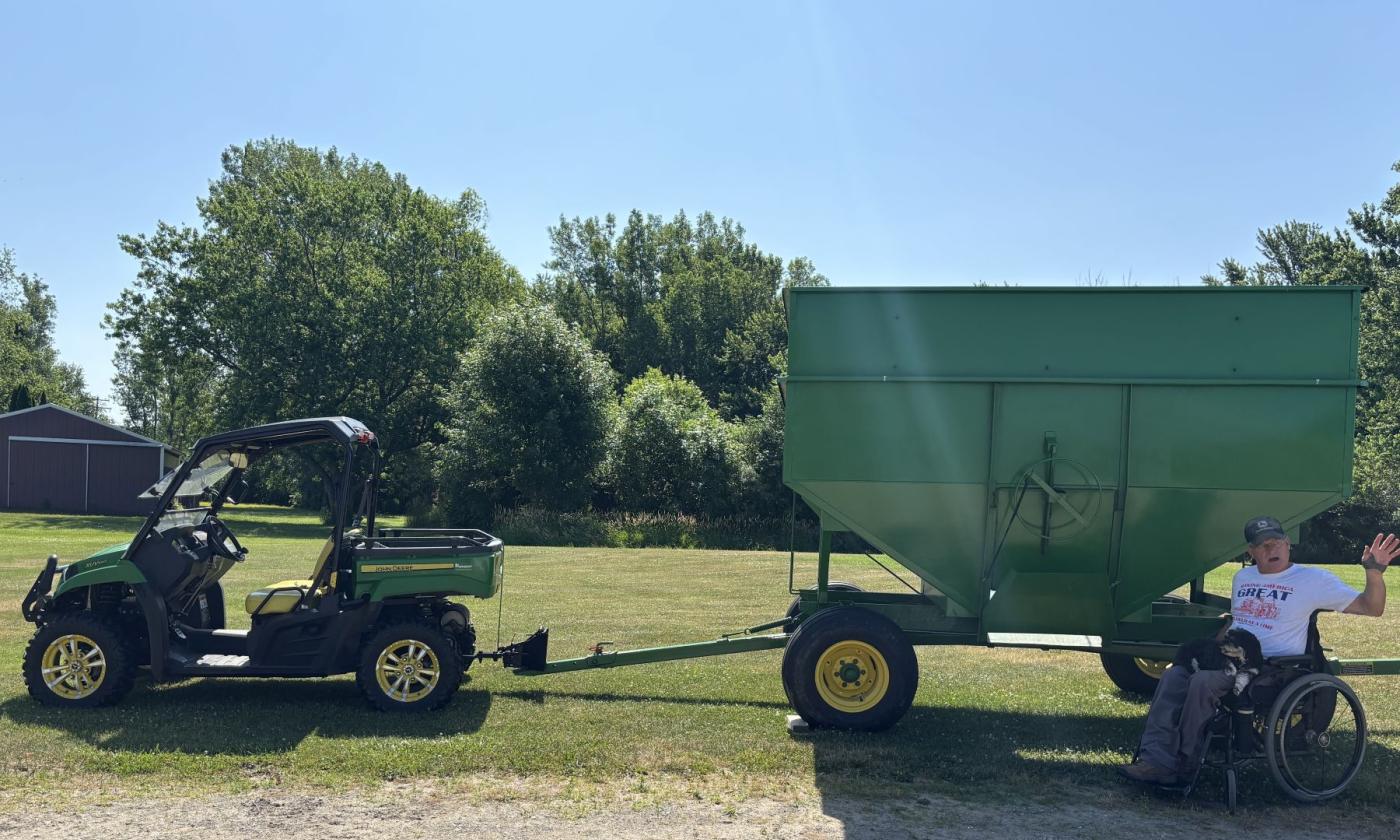
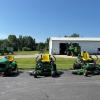

Ottawa County farmer Doug Verhoeven was 16 years old when a car accident took away his ability to walk. Forty-nine years later, he farms 90 acres of corn and soybeans on his own, hooking and unhooking equipment, getting in and out of tractors and combines, and helping other people with physical disabilities spend time outdoors.
Michigan AgrAbility (in partnership with EasterSeals/MORC and MSU Extension) held a demonstration of assistive technology for agriculture at Doug’s farm last summer. It was a showcase of ingenuity and determination.
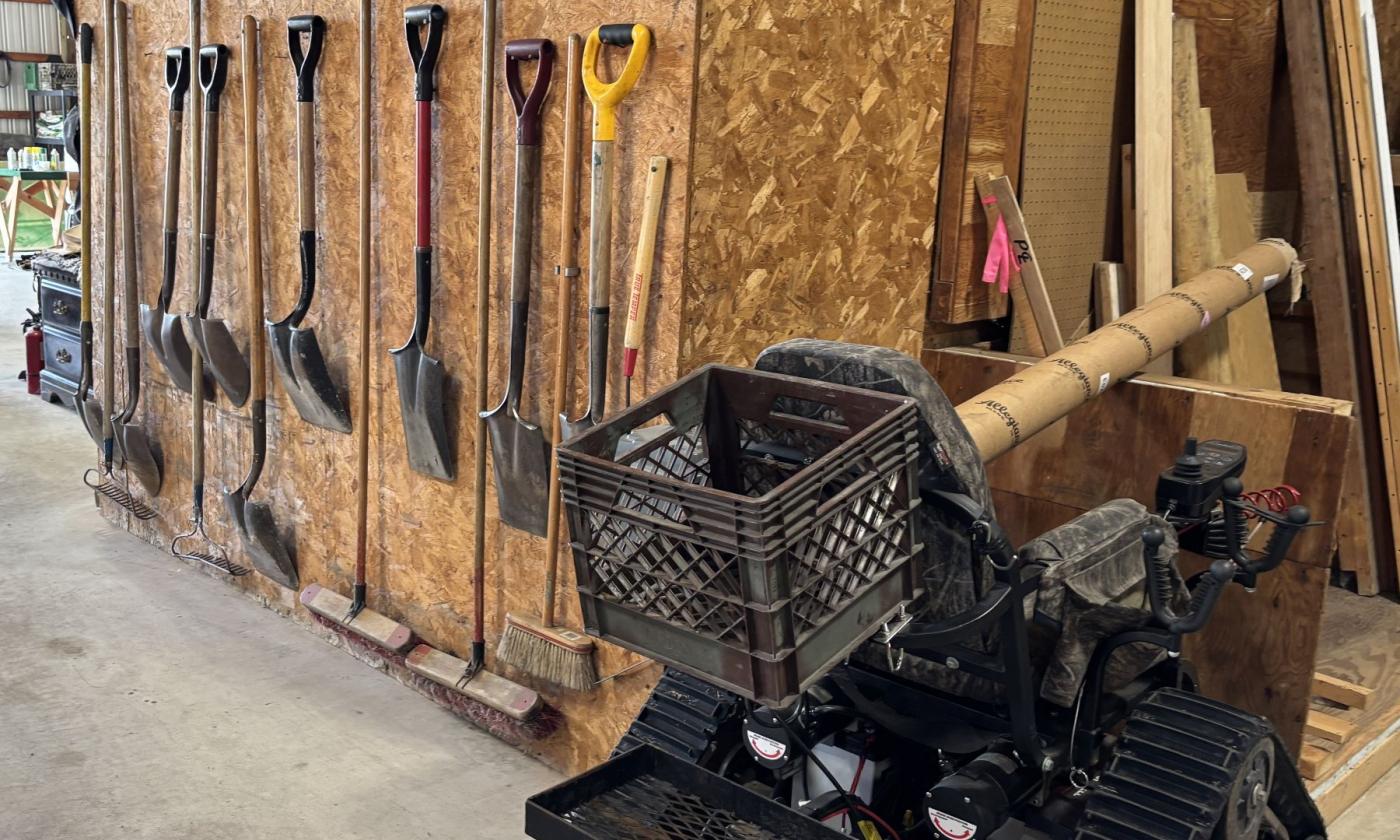
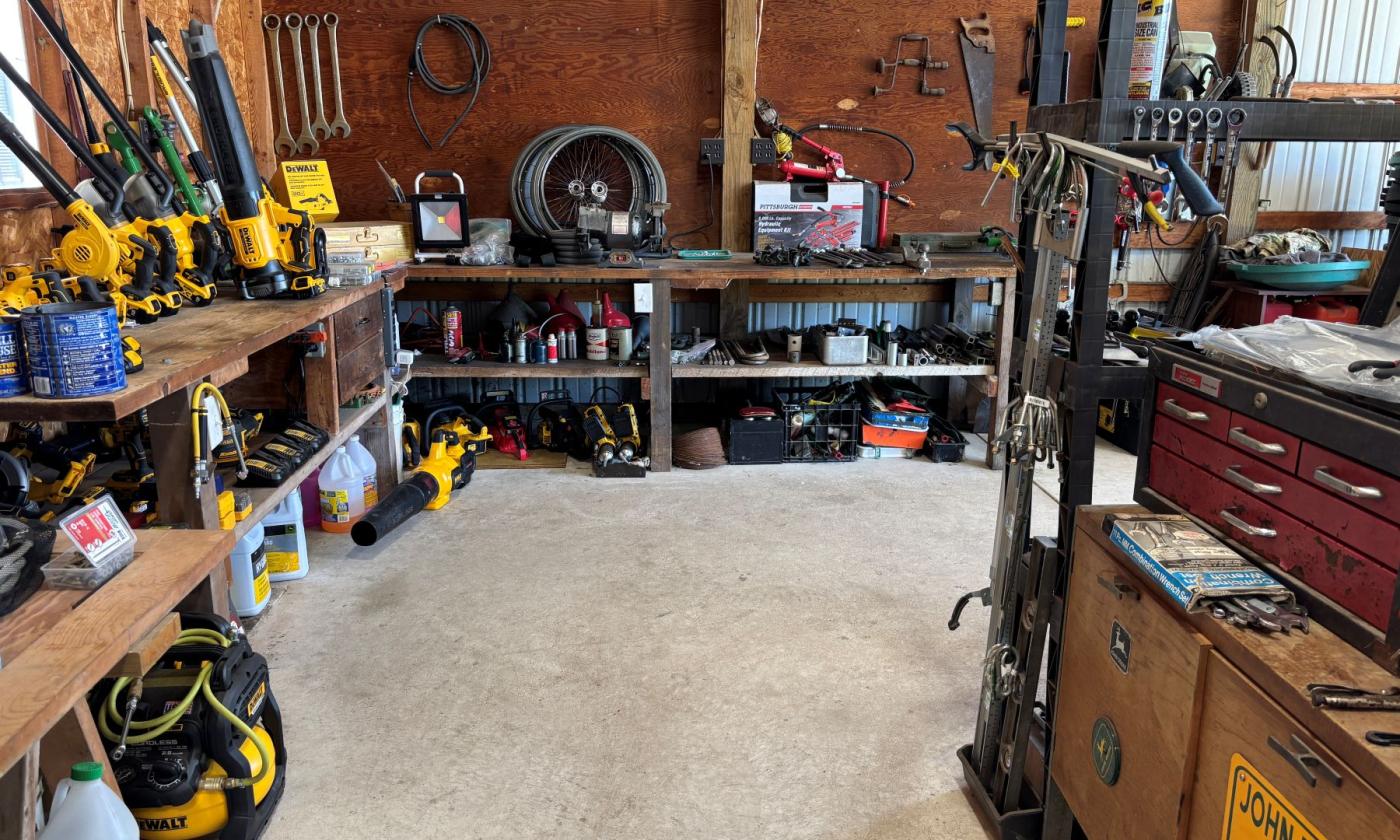
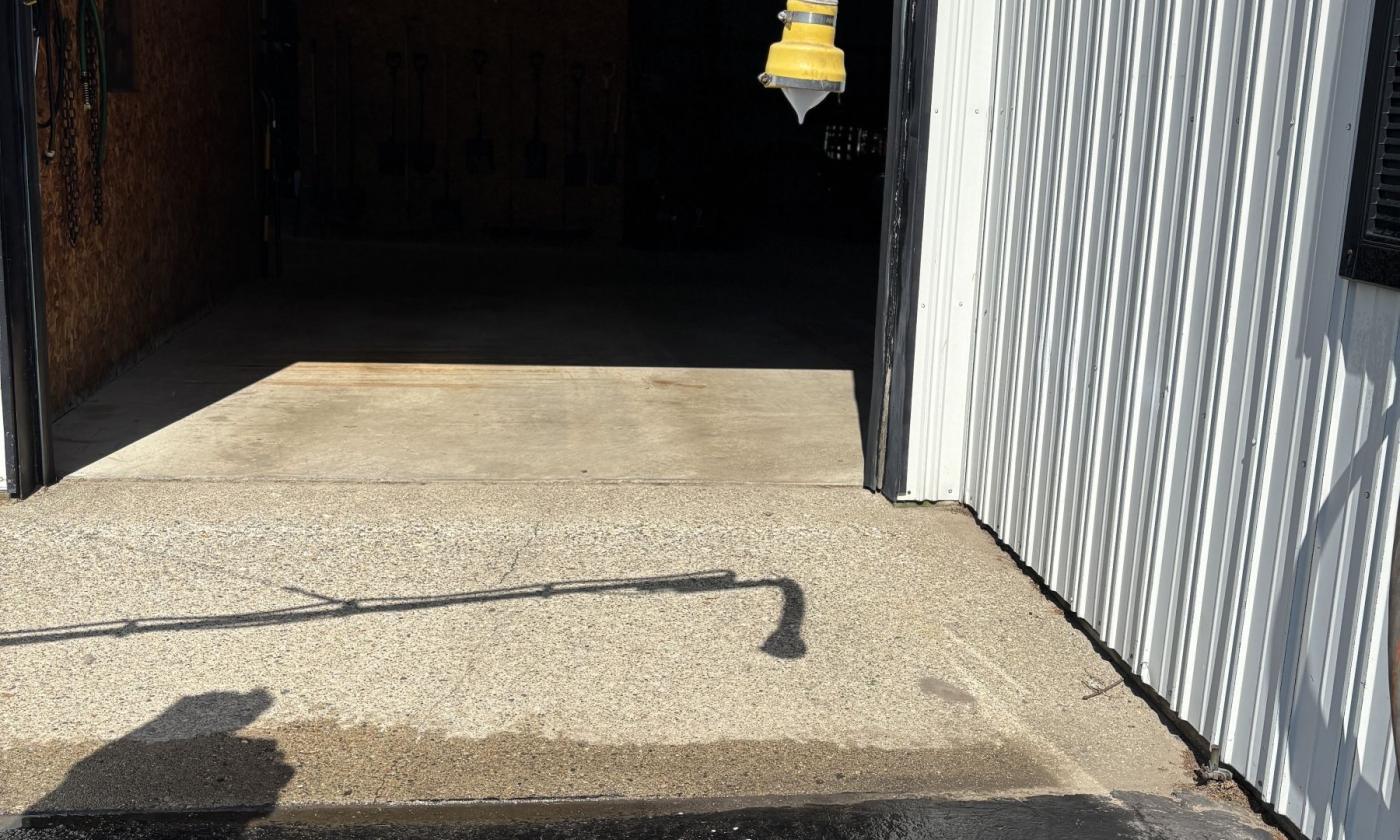
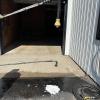
Some solutions were simple: good organization and labeling mean that it’s easy for Doug to get to all his tools in the workshop. The shelving and everything hung on the walls were all at a height he can reach from his wheelchair. Wide aisles between benches make it possible to maneuver in his chair. He had sliding barn doors converted to garage doors that could be raised and lowered with the push of a button.
Other solutions came after a whole winter of tinkering. He loves to buy older farm equipment and figure out how to adapt it to his needs.
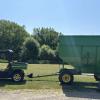
He’s moved hydraulics so he could reach them, put switches on the ends of cords, welded in pieces of other equipment so he could brake and shift his combine, installed a foam marking system so he can see the row he’s planted, and designed a 3-point hitch so he can pick up and move equipment by himself. As a result, he can independently do everything necessary to plant, cultivate, harvest, and deliver his crops.
Some of this he’s done with Michigan Rehabilitation Services and with Michigan AgrAbility’s engineer, Ned Stoller. At the event, Ned said that it took them two years to figure out how to raise and lower a planter while controlling the tractor. Doug said, “We try and learn—not try and fail.”
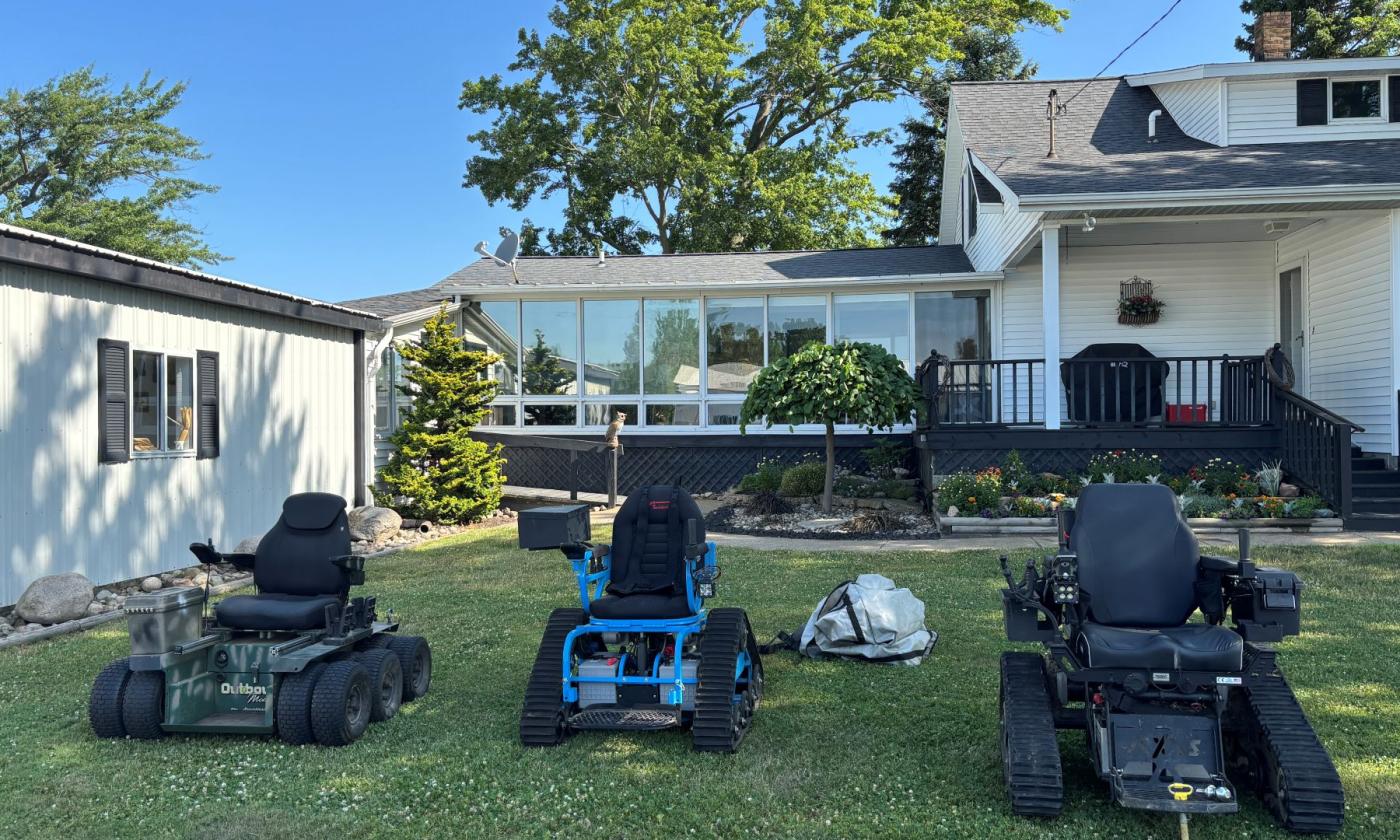
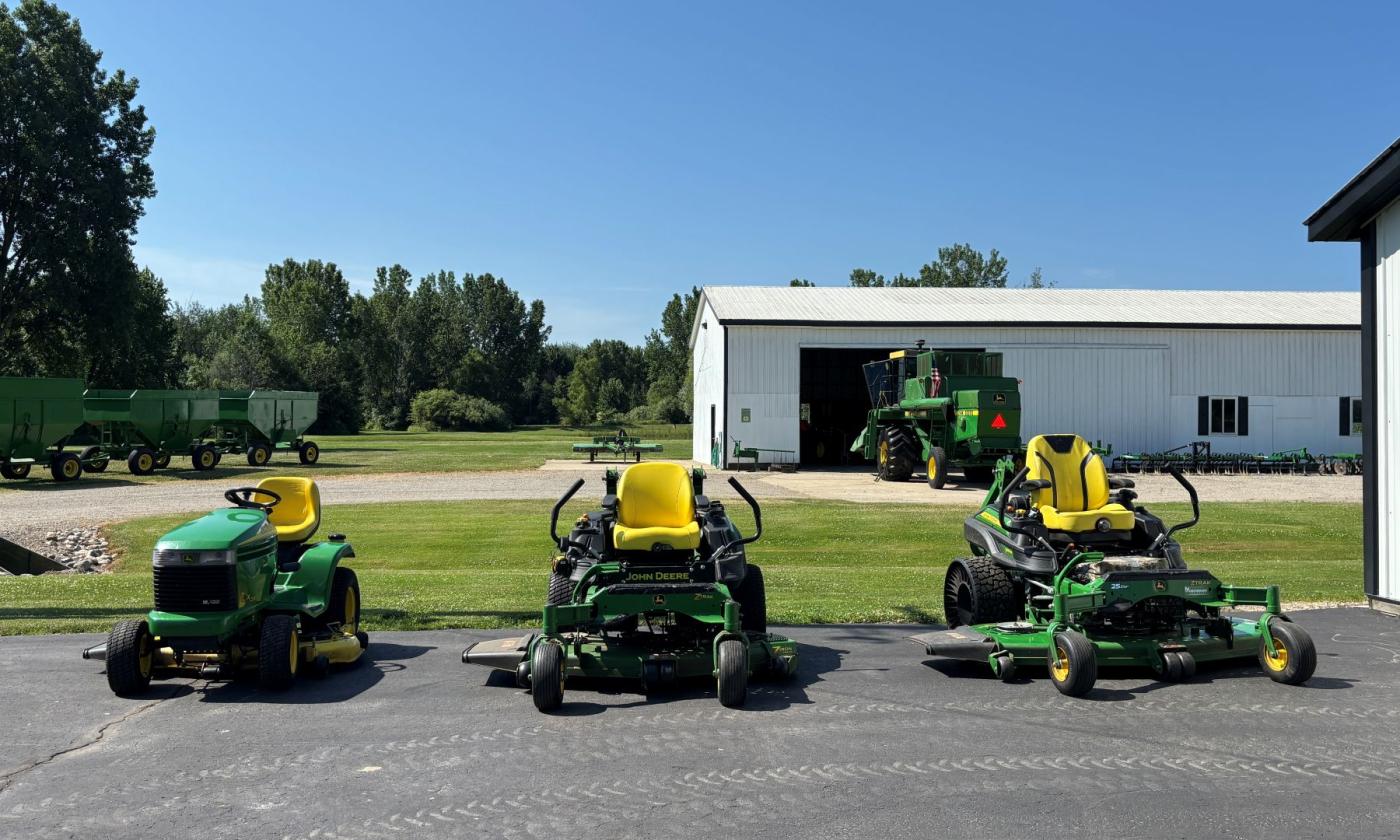
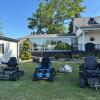
Doug is continually improving his set-up. He’s on his third riding mower, third electric track wheelchair (great for hunting), and is always thinking of ways to make his current systems more useful. More useful also means more fun. He said, “The outdoors is where I go to clear my head. The more time I can spend out of the wheelchair, the better.”
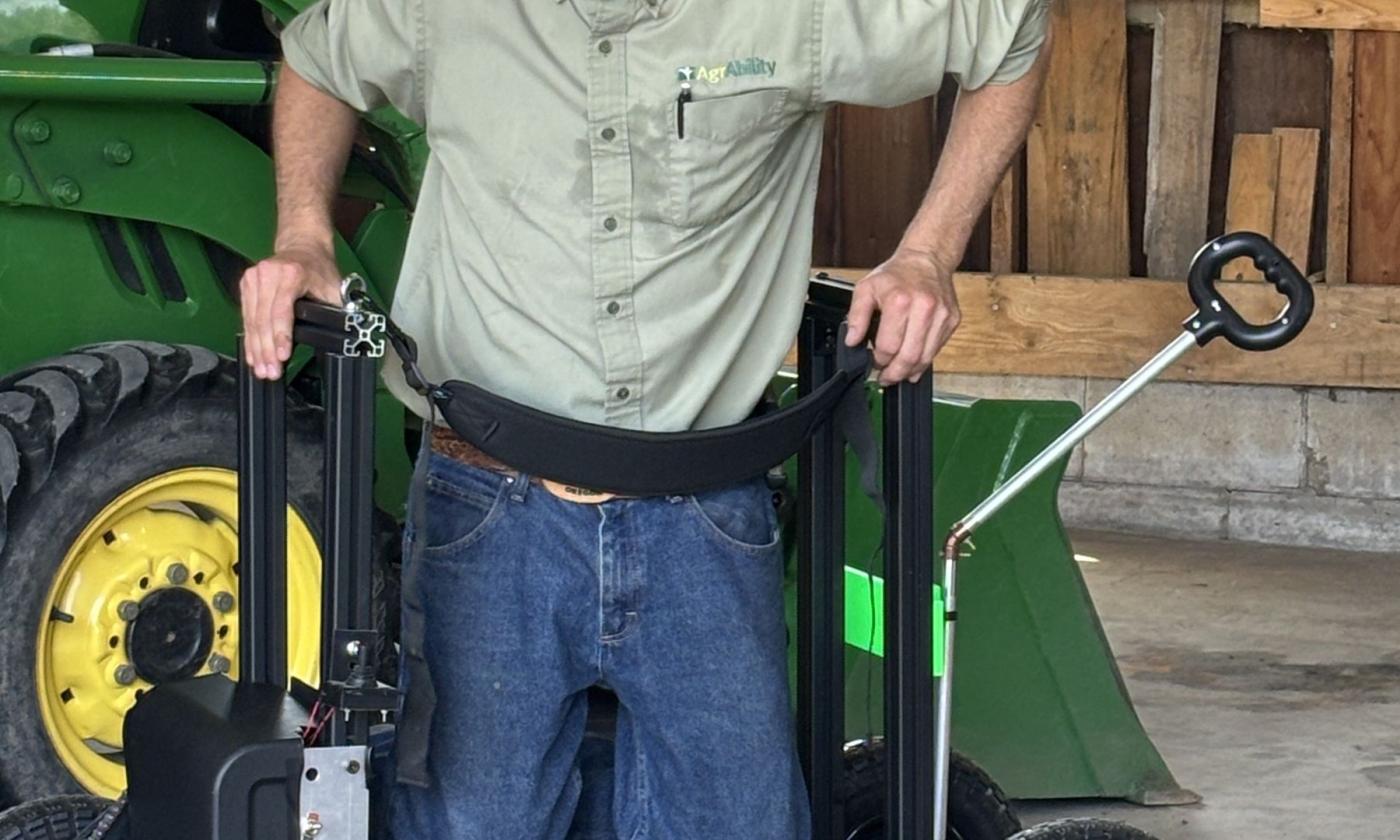
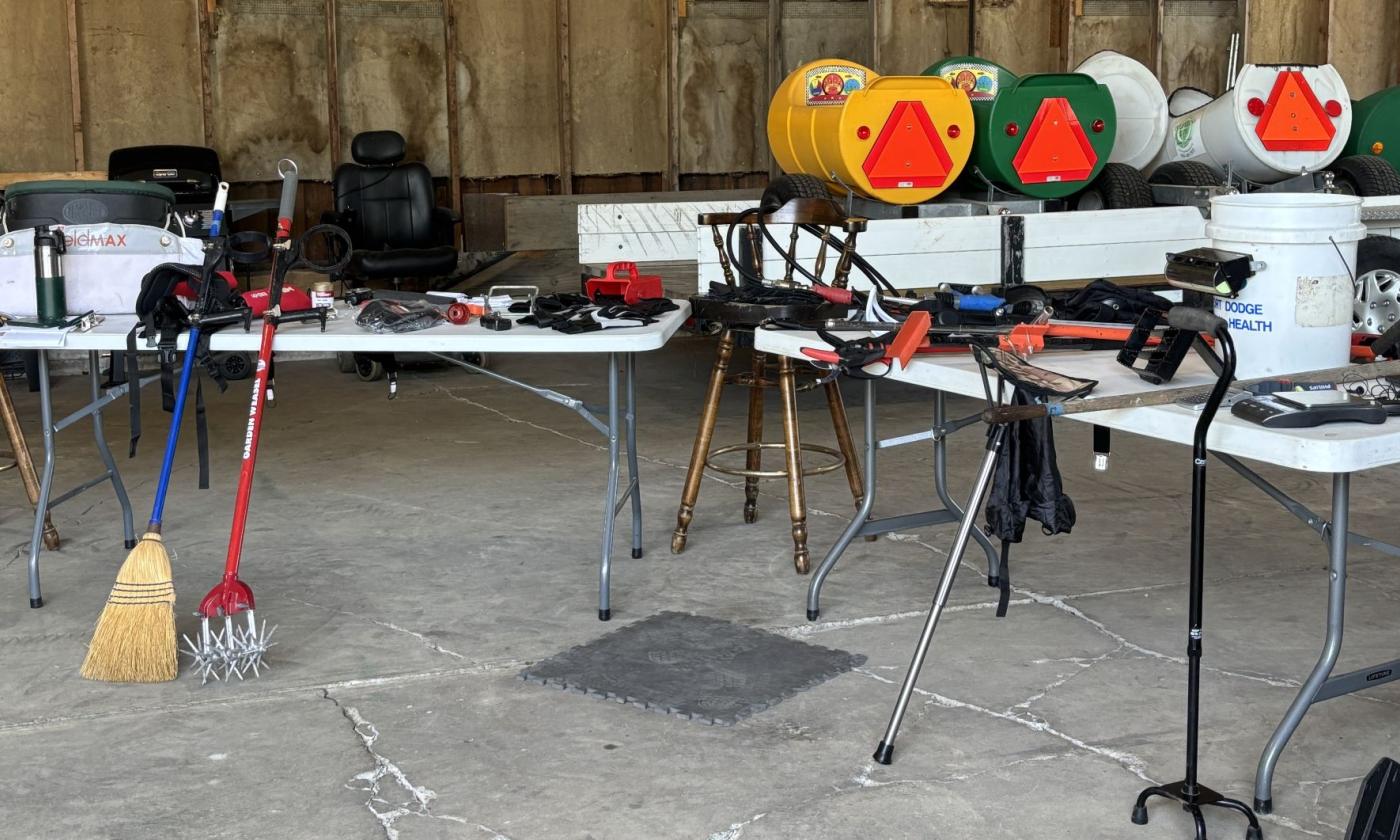
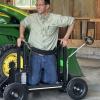
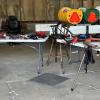
Michigan AgrAbility is a program dedicated to assisting farmers with disabilities or limitations, enabling them to continue their agriculture work through various support services and resources. They had a table at the event filled with adaptive equipment. There were small, easily ordered items like knee pads, neck supports, chin supports, cushioned straps, padded gloves, padding to add to handles, frame grips—even a glove to help keep your hand in a fist around a tool handle. There were also larger items like power pruners, talking scales and calculators, exoskeletons, and modified kneeling carts.
These items are helpful, but when a farmer has physical limitations, Michigan AgrAbility adds time, expertise, and determination. Ned Stoller spends time with farmers who reach out to the program, watching them work, talking with them about what they want to do. Then he will research and, if necessary, design solutions that are specific to their needs. Ned describes how he works with farmers as planting a seed: “I show them what’s possible and then the farmer starts dreaming.”
If you or a farmer you know would like to learn what’s possible, please reach out to Michigan AgrAbility at (800) 956-4106 or [email protected].