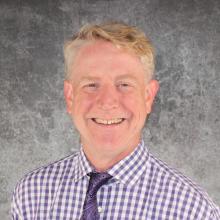

Back in July, my rainy-day conversation with Eaton County’s Katelyn Thompson wandered far from its starting point. Her ease and eloquence speaking about the value of Farm Bureau membership was striking. I saved the notes, waiting for the right opportunity to incorporate her comments into some subsequent article.
Actually they’re not notes; it’s a verbatim transcription of Katelyn’s articulate and beautifully intelligent thoughts about many key components of the organization: Membership, P&E, Young Farmer, networking, events…
I just read through it again and am choosing to share it in its entirety, and I strongly encourage you to give it your best attention. There is tremendous value here, regardless of your level of Farm Bureau involvement:
Jeremy: Talk to me about the value of Farm Bureau membership. For you personally, what do you get for your 50 bucks? And why are you a member?
Katelyn Thompson: In Michigan, with how diverse our agriculture is, being involved in Farm Bureau has given me a breadth of experiences. You don’t realize how lucky we are until you start talking with people from other states or regions. When they start talking about fruit production or different livestock or crops, I might not know all the details but I do have a frame of reference: I can conceptualize that, and for me, that’s important and it helps me know how all the pieces fit together.
The people side is where Farm Bureau as a whole — at the county, district and state levels — is a community. Look at families that’ve been involved in Farm Bureau for generations and the connections they have. That’s a community a lot of people are missing.
Some counties struggle with the Young Farmer program. In your early 20s you’re still figuring life out; they don’t know what they want to be involved in, so they’re trying new things. Once Young Farmers start having kids and figuring out what they want to be involved in, we have to make space for their kids as well. In Eaton County we’re making things that are just that, so our members can build their community.
Jeremy: Why is that important? What’s the value of that family and community?
KT: Young Farmers who didn’t grow up in Farm Bureau should think about it as a resource. You’re farming, you hear of a new practice, and you’re like, “Oh I want to try that” — or a new connection, or a new resource for information — and you’re like, “Wow, I never knew about that before.”
Farm Bureau can fall into that role. There are still a lot of people who don’t know the organization — don’t know what we do or how wide an experience you can have — but if they learn about Farm Bureau as an adult, they can pinpoint that time: “Yeah, I learned about it at this point — when I started to access the Farm Bureau network and all the minds within the organization, all the relationships.”
For me, serving on the state Promotion & Education committee, I can call any number of people for any number of issues or problems: If I need maple syrup for Breakfast on the Farm, I know who I can call.
My sister and her partner are great about taking their kids to events. My nephew will be eight in November; his first State Annual Meeting was when he was three months old. The family aspect is super important. Our parents were always big on that: If they were going somewhere, we went with them.
My nephew will never wonder about Farm Bureau because he’s always going to know it’s a resource supporting farmers and agriculture.
For us to instill that within our Farm Bureau community is important, because I would like, for this next generation, I want it to always be there: seamless and constant and a resource you take for granted because it’s there when you need it.
The idea of a “safety net” gets a negative connotation sometimes, but that’s really what it is. Our staff is a wealth of knowledge — a resource — and that’s just the staff. Then look at the members and all they’ve achieved!
This organization runs on volunteer power. They don’t get paid, so they’re doing it because they see the value in it, and they have something to share. Whether it’s time or knowledge or resources, they’re out there doing that.
The ag community is so small, the more you get involved, the more you get connected and the more you learn. One of my biggest things, volunteering with youth, is that I want the next generation to start further ahead than I did. A driving factor for me is pushing people forward sooner so they can achieve even more.
I think the great part about Farm Bureau is that it’s an organization where you can volunteer when you have time, and when your busy season comes and you don’t have time, that’s okay. That acceptance factor is a big piece of why Farm Bureau is a community: It’s accepting people as they come in. Do we have work to do? Of course — we can see that — but by and large our mentality is: Just come in.
Sometimes we have to be better about pulling people in, instead of just saying the door is open. The door might be open, but people don’t know whether they can come through that door or not. We have to be better about pulling them in — because once you’re in, there’s no question of whether or not you belong, or what space you can participate in.
Katelyn's latest: Beginning in March, Thompson will represent Michigan on AFBF's Promotion & Engagement Committee.
Share Story
Article Tags