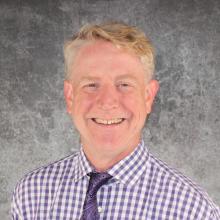

Most new-president conversations focus on their newness to leadership. But when they’ve already been there and done it all, it’s hard saying what direction they’ll take, so it’s best to hold on loosely.
As chance would have it, my recent conversation with Denny Sikkenga saw him wandering directly into the path of my runaway curiosity.
“After the county annual they told me I was the only active board member north of the river. I’ve been vice president several times, but never president,” Sikkenga said. “I’m still learning. A president ought to know the people, but I just don’t know folks over there that well, so ask about farmers this way north.”
“This way north” refers to his farm anchoring an area far removed from Muskegon County agriculture’s center of gravity: The Ravenna scene — dairy, beef and pickles — dominates the county membership, while the sparse and distant Montague contingent relates closer to neighbors in Oceana and Newaygo, not across a wide river valley and through our biggest Lake Michigan port town.
“We’ve been talking about doing more cross-county and district events — get some networking and some relationships building,” Sikkenga said, referencing days gone by when Community Action Groups built better cohesion among hyper-local groups of Farm Bureau members.
“CAGs got together every month and talked — you saw them all,” he said, and the resulting familiarity and cohesion forged stronger bonds among members than we see today.
That’s not to say they’re avoiding intra-county events; some greatest hits are on tap for 2026.
“It’s going to be fun,” he started. “We haven’t done a tire-recycling program before, and we’re talking about doing a deer-harvest program, too — possibly adding a venison cook-off to that.
“I’m all for giving members more reasons to be members,” Sikkenga said, sliding open the shop door to where membership value is always being wrenched on, tweaked, souped-up and exercised. “Some say you’ll never get your dues’ worth, but if you even approach getting involved, that $50 becomes really cheap, really quickly.”
Another example close to his heart: Sikkenga leans into policy like the seasoned vet he is — then adds a twist of this and a splash of that, betraying an understanding of how many benefits intertwine at the end of the day.
“I like seeing our concerns expressed in Washington — that’s important. Being able to go to D.C. and talk with legislators is pretty important.”
And when his own agenda runs thin, he gathers input like a true representative — from his constituents — and get this: whether they’re Farm Bureau members or not.
“I do my own thing. Maybe that’s something we should be more proactive with, because even if a neighbor over here [Denny leans back and gestures toward the northwest] has never been a Farm Bureau member, he’s just never seen the value of it.
“But if somebody went to his farm and said, ‘I’m going to Washington to talk with our legislators. What can we talk to them about on your behalf?’”
And isn’t extending a friendly hand to non-members something we encourage anyway? Bring a guest so they can see for themselves.
Today’s challenges in membership and involvement make sense to someone who’s see his own livelihood streadily contract since day one.
“When I got into it with my dad back in the 80’s, we had a co-op of 24 dairy farms. We would ship milk over to Leprino and Michigan Milk, but then it got down to being like three of us.
“We doubled the herd size and I was here and still only 200 cows wasn’t cutting it.”
Making a living from not much land strikes a chord with Sikkenga as his own farming footprint has receded over time.
“We quit raising row crops because we were only doing like the 20-30 acres a year. My land is okay, but it’s not good enough to raise 180-bushel corn or nothing.
“You have a lot of people who have a few chickens and a type of homesteading operation. They want to have a little elbow room out in the country, but that becomes ‘What am I going to do with these five acres?’”
Serving those members is as important as large, consolidated dairies.
“How about some event where they can come in and say, ‘You got 10 acres. How do you make a living on 10 acres? How can you raise cattle on that or composting or maybe aquaculture?’”
That led to my now-routine question about Farm Bureau’s support for all farms, regardless of their commodity, production style or scale, from ‘hobby’ to ‘mega’ and everything in between.
Sikkenga knows “big guys” want information about equipment innovations, labor pitfalls, global trade, hot hybrids and techy bells and whistles from GPS to automation.
“And that’s all fine and dandy, but for the guy who’s got five acres or 10 acres or 100 acres or whatever and is making a half of a living or less — they don’t really care much about all of that.
“You’re gonna lose those people,” he said, and losing people is not on any county Farm Bureau agenda.
“Farm Bureau has a vested interest in taking care of both large and small: We need to. It’s our bread and butter in the future. If we lose our ability to produce food in America, we’re gonna be screwed.
“Big farms produce the bulk of it, but if you want to build member base,” only welcoming smaller operations into the club will maintain the numbers necessary to preserve the organization’s clout and strength.
“Farm Bureau has to recognize the little farmers too — give them help and represent them.”
Share Story
Article Tags