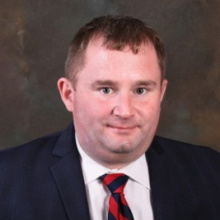

Editor’s note: Michigan Farm Bureau has coordinated with the candidates for Michigan’s open U.S. Senate seat and the gubernatorial race to provide their responses to four questions to help you learn more about the candidate, their background, and agriculture-related views. In the interest of fairness and objectivity, staff did not write or edit the candidates’ submissions. Each profile is presented as submitted by the candidates.
U.S. Senate Candidates: Mallory McMorrow, Mike Rogers, and Haley Stevens
Candidates for Governor: Jocelyn Benson, Mike Cox, Mike Duggan, John James, Perry Johnson, Aric Nesbitt, Ralph Rebandt, and Kim Thomas
Jocelyn Benson – Democratic Candidate for Governor
In your words, tell us who you are and why you’re the ideal candidate for Michigan governor.
I’m running for governor to lower costs, raise wages, and protect the rights of Michiganders. I recognize that the job of the next leader of our state is to make sure government is working for you and making life easier.
As Secretary of State, I showed how you can make government work by saving residents time and money, including by reducing wait times at branch offices from hours to 20 minutes. That will be my goal as governor – making government efficient and life affordable for farmers, rural residents, and all Michiganders, just like I did as Secretary of State.
What do you believe is the most pressing issue facing Michigan residents today, and what specific policies would you pursue as governor to address it?
The biggest problem facing Michiganders is the high cost of living.
I’m the only candidate with a focus on this problem through my Affordable Michigan agenda that will tackle each part of this affordability crisis. Take housing: too many Michiganders can’t afford to live in the communities where they work. I will make it easier to build homes faster from the local to state level. My goal is to streamline the process so builders only have to wait a few weeks on approvals, rather than many months. And I want to expand workforce housing so our nurses and farmers in rural areas have a place they can afford to live.
I also know that health care is unaffordable and inaccessible in rural Michigan. As governor, I want to bring care directly to communities by investing in mobile health centers so folks don’t have to drive for hours to get care. And while others in this race are voting to raise healthcare costs in D.C., I want to lower them, and expand our healthcare workforce to overcome the critical shortage of medical professionals in rural healthcare deserts.
I know what it takes to fix broken systems. I’ll take the same approach I took to my Secretary of State offices to MDARD and EGLE–departments which I know can feel more like an obstacle course than a helping hand to our farmers and rural residents. I’ll cut through the red tape and make sure state government is saving you time and money.
Michigan agriculture is a major driver of the state’s economy and rural communities. What do you see as the greatest challenge facing Michigan farmers today, and how would your administration help address it?
The biggest challenge facing Michigan farmers is higher costs. Supply disruptions from the Middle East and President Trump’s tariffs are making farmers’ operations more expensive. Fertilizer costs are up 30 to 40 percent. And climate change is reshaping growing seasons, with invasive pests and crop diseases threatening harvests. These changes are leaving our farmers with failing or fast-spoiling crops, forcing them to rush to market and accept lower prices, cutting into the livelihoods they depend on.
These are real problems and anyone who wants to lead this state needs to be paying attention. I have had the chance to visit farms across Michigan, including MSU’s horticultural center — talking with farmers and researchers shaping the future of agriculture. Their work is why Michigan continues to lead in agricultural research and innovation, and we need to keep investing in it.
But investment alone isn’t enough. We need leaders who will prioritize our farmers and agricultural workers. During the pandemic, I classified farming as an essential industry and kept our Secretary of State branches open for farmers because if they couldn't get their food and pesticide licenses renewed, they couldn't work. And that's what government is supposed to do: show up when you need it and then get out of the way when you don’t.
I will bring that same approach to MDARD, so that getting a food or pesticide license doesn’t feel like a second job. Farmers shouldn’t have to fight their own government just to do their work.
Michigan farmers depend on both a strong economy and healthy natural resources. How would you work to balance agricultural productivity, environmental stewardship, and regulatory certainty for landowners?
As CEO of one of the largest state agencies, I have a track record of working with leaders on different sides of issues to get big things done. We’ve gotten bills through the legislature where others have fallen short. We were able to transform the Department of State’s customer service operations because of bipartisan support I built working with a Republican-led legislature. My record is one of getting people who traditionally disagree into rooms together to hash out common sense solutions.
I challenge anyone who says that farmers and environmental groups must be in conflict with one another–I think the opposite, that they can each learn from one another and work together for the benefit of the state as a whole. We’ve already seen that in Michigan and across the country–with environmental groups working with farmers to develop sustainable farming practices, to name just one example. That’s the sort of collaboration I will encourage in Michigan as governor.
Share Story
Article Tags